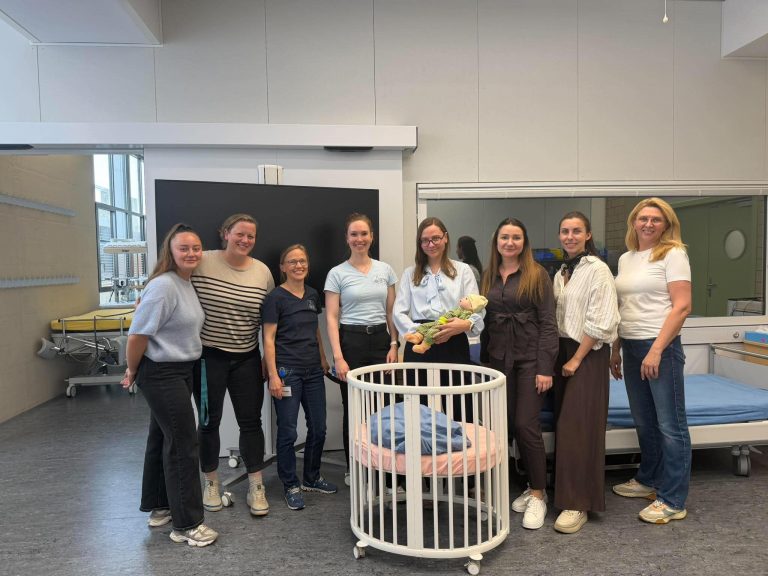
In Switzerland, maternity care specialists support women not only during childbirth but also throughout the first weeks after returning home – a practice that is inspiring the search for new solutions in Lithuania. As part of the project “Improvement of Obstetrics and Children Health Care Services and Implementation of Holistic Child Development Services”, five Lithuanian specialists took part in a professional study visit to Winterthur, Switzerland, from 19 to 21 May.
During the visit, the Lithuanian representatives became acquainted with advanced models of maternity care focused on continuous support for women and their families throughout all stages of motherhood. They also had the opportunity to visit the Institute of Midwifery and Reproductive Health at the Zurich University of Applied Sciences – one of the leading centres for obstetrics science and reproductive health in Switzerland and Europe.
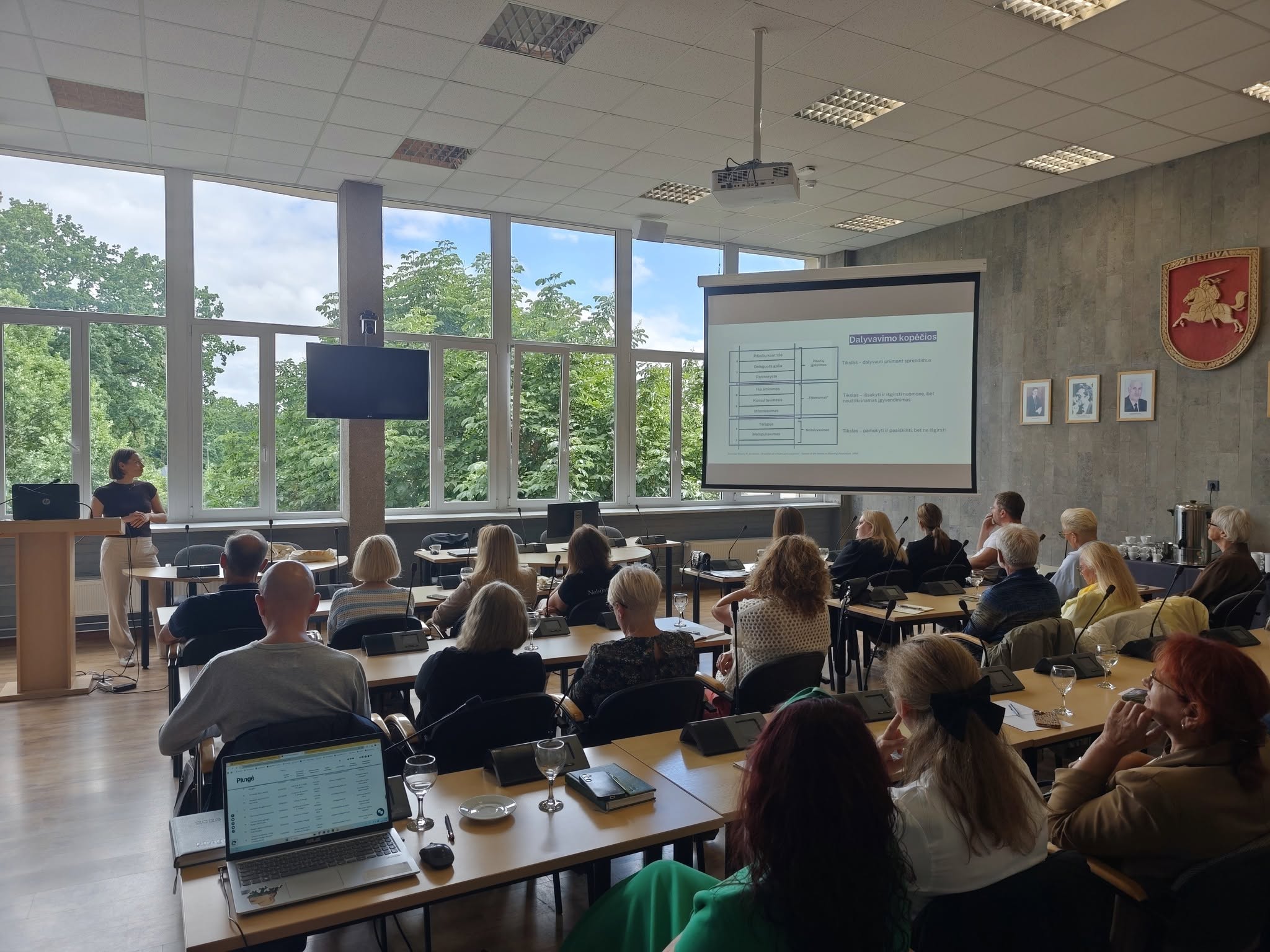
The Lithuanian specialists explored the role of maternity care specialists at different stages of maternity care, learned about advanced obstetric training methods, approaches to strengthening practical skills, and simulation-based training, with particular attention given to the development of communication skills.
The delegation also observed practical maternity care practices in maternity units, became familiar with independently provided antenatal care services, and learned about postnatal home visits.
During the visit, discussions were held on the differences between the Lithuanian and Swiss healthcare systems, obstetric education, and opportunities to adapt Swiss best practices in Lithuania, particularly regarding strengthening the role of maternity care specialists in ensuring continuous support for women and their families.
In Switzerland, maternity care specialists independently supervise around 40% of pregnancies, while approximately 7% of women give birth attended solely by a maternity care specialist. Maternity care specialists also play a particularly important role during the postnatal period – as many as 99.9% of patients receive postnatal care from maternity care specialists, who carry out between 10 and 16 home visits during the first 56 days after childbirth. During these visits, they provide consultations on breastfeeding and newborn care, assess the woman’s physical and emotional wellbeing, and support the entire family. This model ensures not only high-quality medical care but also emotional security during the first weeks after childbirth.
“This visit was a valuable professional experience and provided an opportunity to gain first-hand insight into advanced maternity care models. Cooperation between Switzerland and Lithuania allows us not only to learn from international experience but also to seek long-term solutions that could help strengthen the quality of maternity care in Lithuania. We hope that some of the practices applied in Switzerland may in future be adapted in our country to ensure even higher-quality, safer, and more woman-centred care,” said Professor Mindaugas Kliučinskas, Head of the Obstetrics and Gynaecology Clinic at Kaunas Clinics.
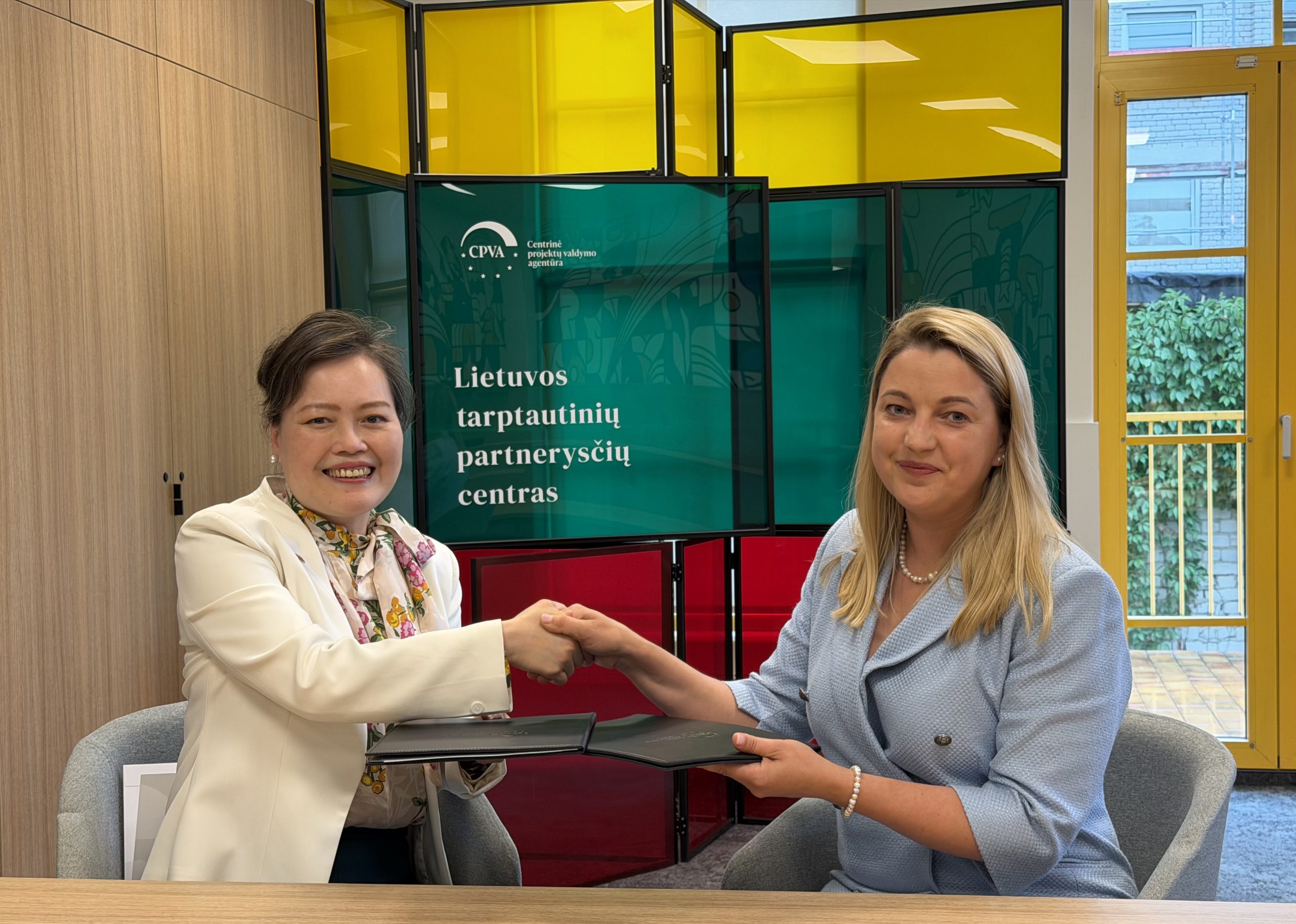
The visit was organised as part of the Lithuanian-Swiss Cooperation Programme “Maternal and Child Health and Wellbeing”, administered by the Central Project Management Agency. The aim of this programme is to improve the quality and accessibility of outpatient healthcare services for pregnant women, mothers, and children in the regions of Lithuania. The project is funded by the Second Swiss Contribution and the state budget of the Republic of Lithuania.
Information provided by CPVA and the Hospital of Lithuanian University of Health Sciences Kauno Klinikos.