The vocational education and training system in Lithuania is facing significant challenges related to the integration of third-country nationals. A study conducted by the Qualifications and Vocational Education and Training Development Centre revealed that the system is still insufficiently adapted to the needs of migrants – training is predominantly delivered only in Lithuanian, there is a lack of methodological solutions, and staff in training institutions do not always possess the necessary competences to work with culturally diverse groups. These circumstances limit both access to vocational training and the effective integration of third-country nationals into the labour market.
In response to these challenges, the project “Increasing the Accessibility of Vocational Education and Training for Third-Country Nationals” has been launched. Its aim is to enhance the accessibility and inclusiveness of vocational education and training, as well as to create conditions for migrants to acquire in-demand competences and successfully integrate into the labour market.
Based on the results of the analysis conducted by the Qualifications and Vocational Education and Training Development Centre, the project has moved into the practical implementation phase. A selection process for vocational education and training institutions was carried out, during which five state vocational education and training institutions were chosen from 12 applications: Šiauliai Technology Training Centre, Vilnius Car Mechanics and Business School, Vilnius Builders Training Centre, Business and Hospitality Professional Career Centre, and Karalius Mindaugas Vocational Training Centre. These institutions have begun introducing and piloting vocational training solutions tailored to third-country nationals, covering a range of economic sectors – from engineering and transport to construction, services, and the beauty industry.
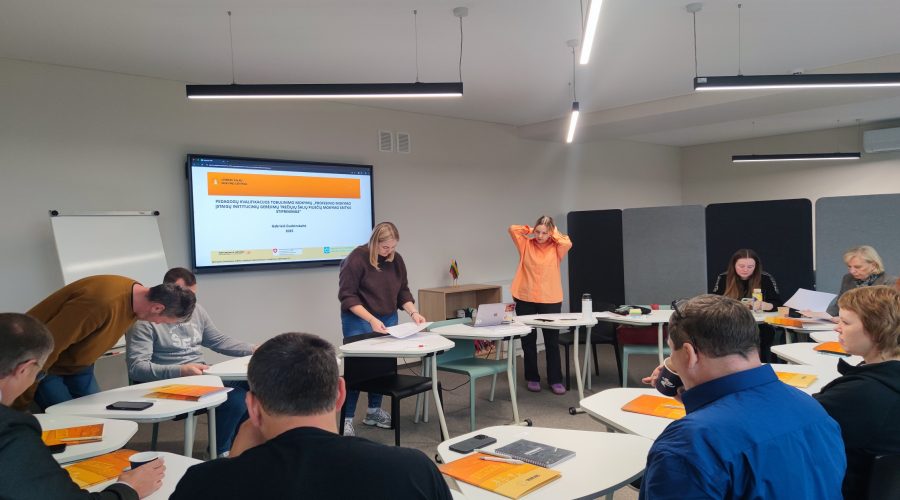
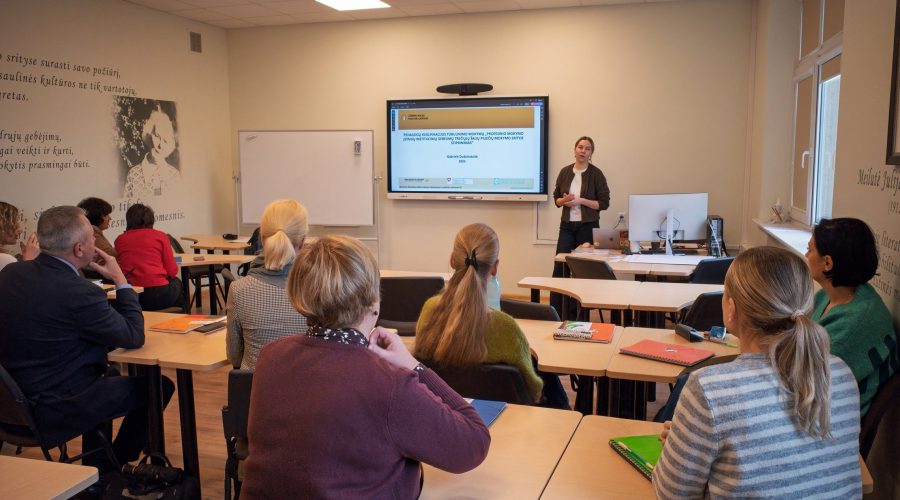
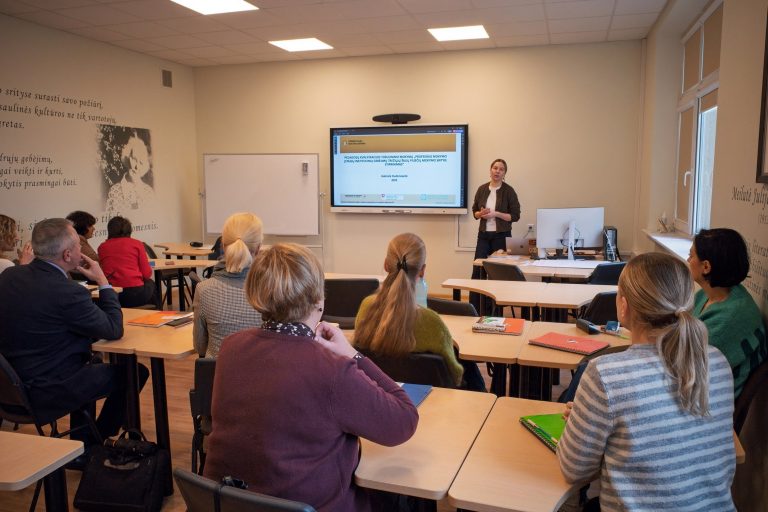
In May 2025, the accredited professional development programme “Strengthening the Institutional Capacity of Vocational Education and Training Institutions in Training Third-Country Nationals” became an important methodological pillar of the project, laying the foundation for the systematic development of staff competences. In implementing this programme, the induction training sessions organised by the project in the last quarter of 2025 were aimed at staff and teachers from the selected vocational education and training institutions, who will practically test the adapted vocational training content for third-country nationals. These training sessions strengthened pedagogical, intercultural, and institutional competencies, as well as preparedness to work with diverse groups of learners. A total of 42 people were trained.
Additional training sessions are also planned for vocational education and training institutions not participating in the project. These will be delivered after the practical testing phase and will be enriched with the project’s practical experience.
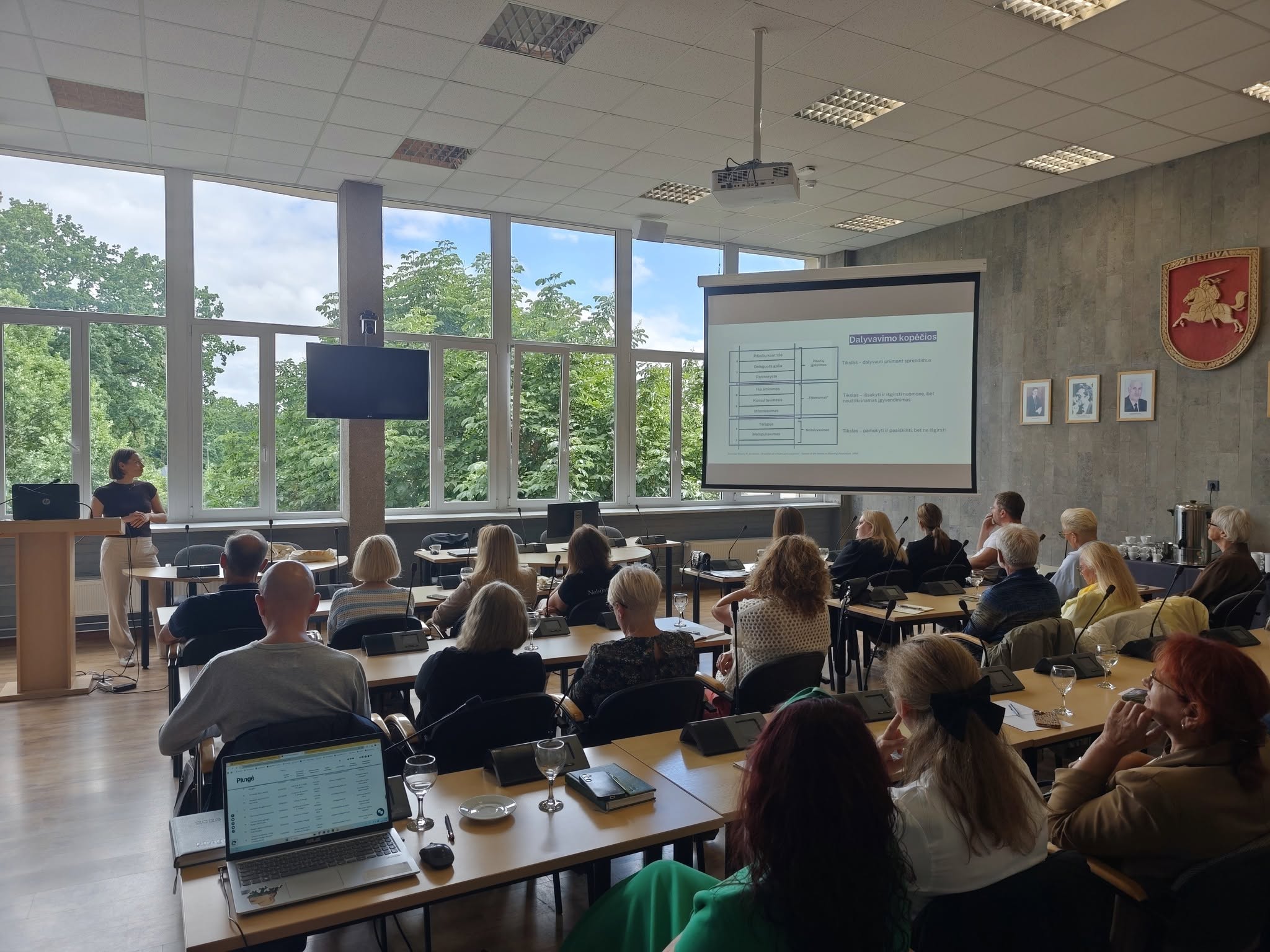
The progress of the project has also been reinforced through dissemination activities and the presentation of interim results. At the dissemination seminar “Training of Third-Country Nationals in Vocational Education and Training: Opportunities and Challenges”, held in December 2025, initial outcomes were presented, highlighting improved conditions for developing more accessible and inclusive vocational education and training. The seminar also addressed EU and national integration policies, emphasised the importance of recognising European qualifications and skills in order to improve employment opportunities for third-country nationals, and showcased practical solutions – from integration programmes to psychosocial support and the adaptation of language training to vocational contexts – underlining a comprehensive approach to integration.
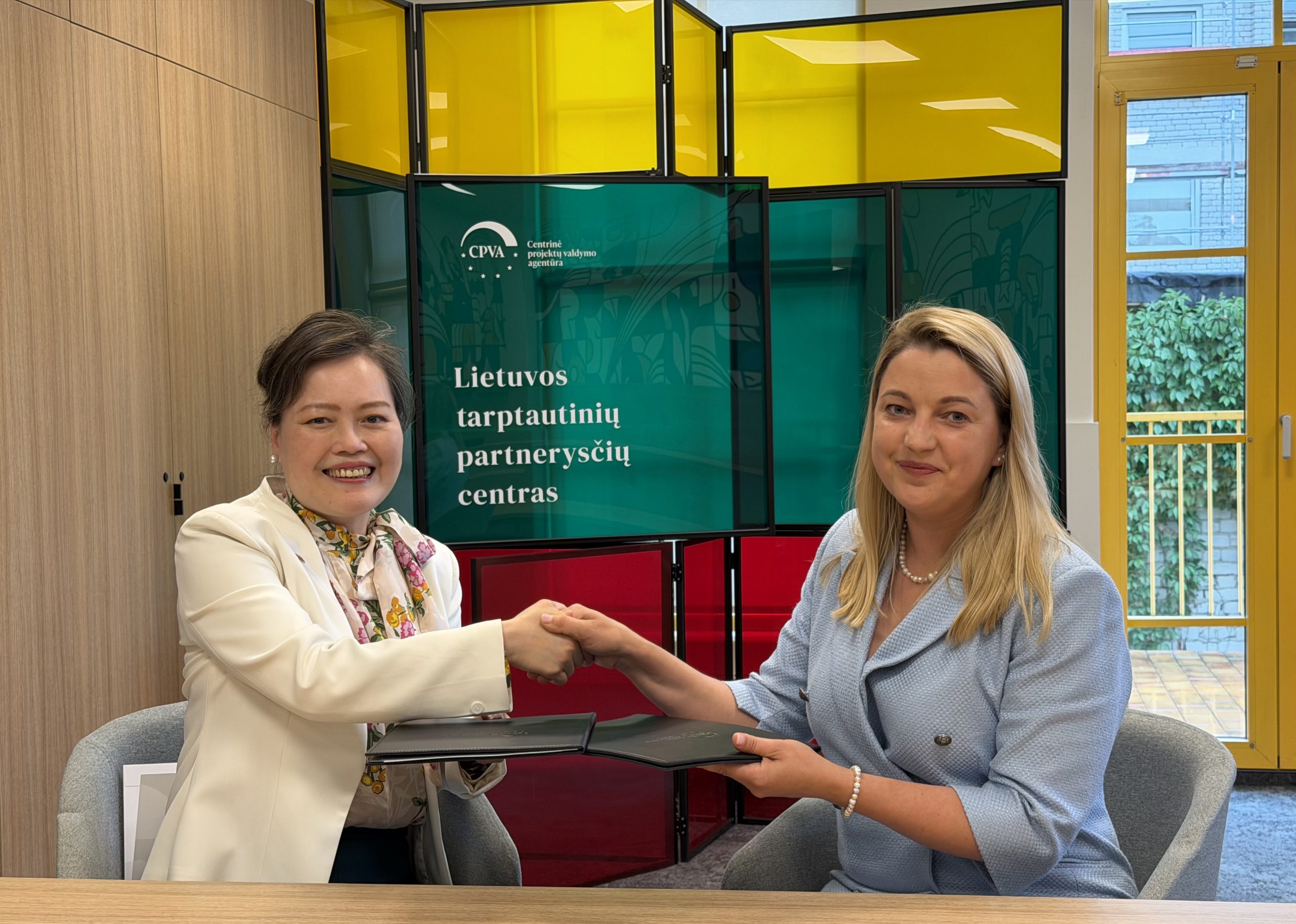
A particularly significant role in the project is played by cooperation with Swiss institutions and experts, enabling the transfer of advanced vocational education and training practices. The Swiss model, based on close cooperation between education providers and employers and the integration of theoretical and practical training, contributes to higher training quality and greater system flexibility. The application of this experience in the Lithuanian context strengthens the project’s methodological foundation and creates the conditions for long-term impact on the labour market.
In the subsequent phases of the project, practical activities will be further developed, including training, the design and piloting of adapted non-formal education programmes, as well as the strengthening of institutional capacities and cooperation with social partners.
The activities implemented within the project are already yielding tangible results. The competences of vocational education and training institutions have been strengthened, and practical solutions aimed at better addressing the learning needs of third-country nationals are being applied.
These results demonstrate a consistent transition from problem identification to the implementation of practical solutions and system improvement. Increasing flexibility and accessibility of vocational education and training creates the conditions for more effective integration of third-country nationals into the labour market, helps reduce the shortage of skilled labour, and strengthens social inclusion.
Project promoter – the Qualifications and Vocational Education and Training Development Centre with administration carried out by the Central Project Management Agency (CPMA). The project is financed by the Swiss Confederation and the state budget of the Republic of Lithuania under the Swiss Confederation and the Republic of Lithuania Cooperation Programme 2022–2029.