The Future School for Ukraine project has reached its final milestone. It is no longer a concept, but a ready-to-adapt and ready-to-build solution that can be used by Ukrainian communities and donors to rebuild schools faster, better, and more sustainably.
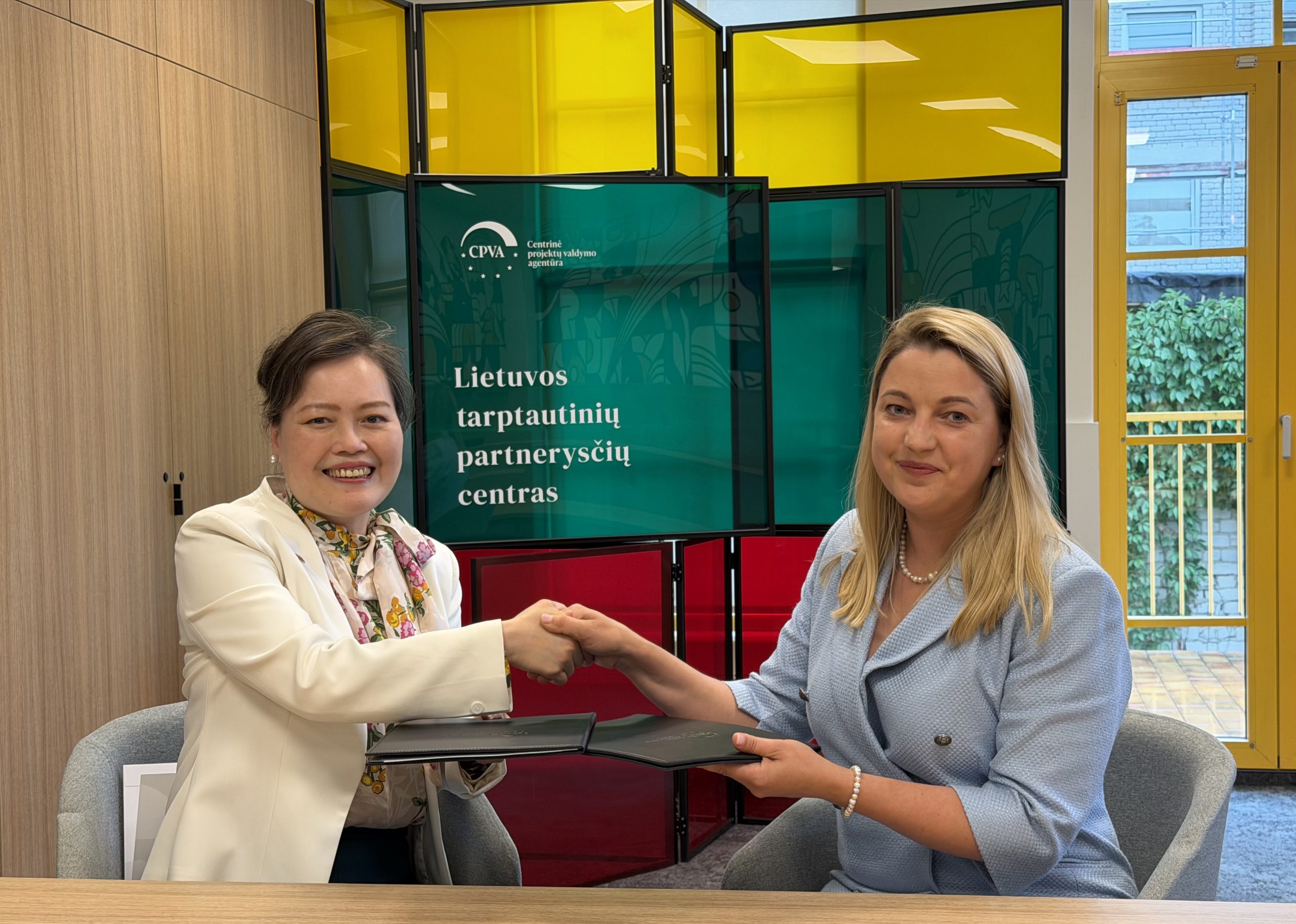
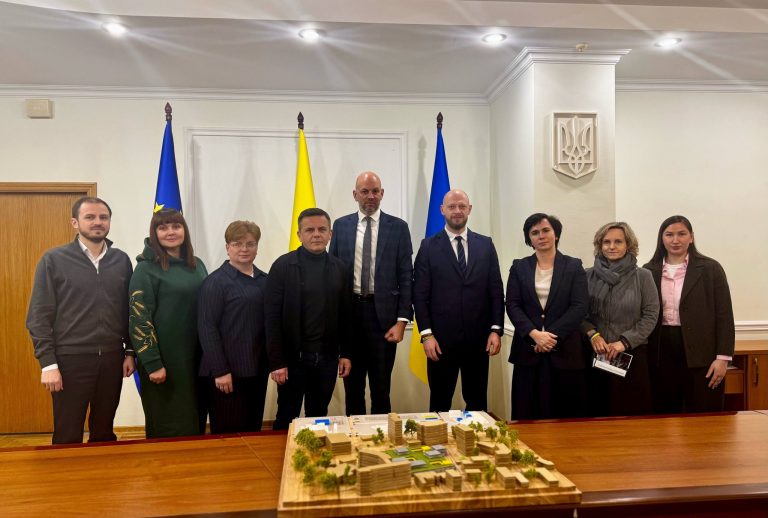
On January 7 in Kyiv, the Central Project Management Agency together with the Ministry of Foreign Affairs of the Republic of Lithuania officially handed over the complete project package — including Building Information Modeling and site-adaptable visual solutions — to the State Agency for Restoration and Infrastructure Development of Ukraine. The handover marked the completion of the project and the start of its practical application.
Why it matters for Ukraine’s recovery
Russia’s full-scale invasion has caused immense damage to Ukraine’s education system:
- Every 7th school in the country has been damaged or destroyed
- More than 2,000 schools have been affected
At the same time, developing a school construction project usually takes at least six months, and significantly longer when aiming for high-quality, future-oriented solutions that meet modern educational, safety, and sustainability standards. For many Ukrainian communities — especially those affected by the war — the cost and complexity of developing such projects are simply unaffordable.
This gap between urgent reconstruction needs and limited local capacity was the reason why Lithuania initiated, and CPVA successfully delivered, the Future School for Ukraine project.
Scalable national solution
The Future School for Ukraine is more than a single building design. It is a scalable and reusable model for creating modern educational neighborhoods that can be adapted to different sites, community sizes, and urban or rural contexts across Ukraine.
The adaptive technical design won global architectural competition, initiated by Lithuania within the project. The winners, Italian–Ukrainian architectural teamthe project and successfully passed state expertise for compliance with Ukrainian requirements. They includ safety, durability, accessibility, engineering systems, and energy efficiency. Now the project has been officially published in Ukraine’s State Electronic System in the Field of Construction, making it available for further use by public authorities and communities.
To support practical implementation, the design is complemented by a Future School Handbook — a practical guide for architects, planners, and decision-makers. The Handbook introduces design principles, strategic approaches, and adaptability solutions rooted in the values of the New European Bauhaus, ensuring that rebuilt schools are not only functional, but also inclusive, sustainable, and future-proof.
First implementation: Zhytomyr
The first Future School will be built in Zhytomyr. Lithuania has committed to support the rebuilding of Lyceum No. 25, destroyed by russia, using the Future School for Ukraine adaptive design. This project will become the first real-life implementation of the model and a reference point for further school reconstruction projects across the country.
Partnership and co-creation
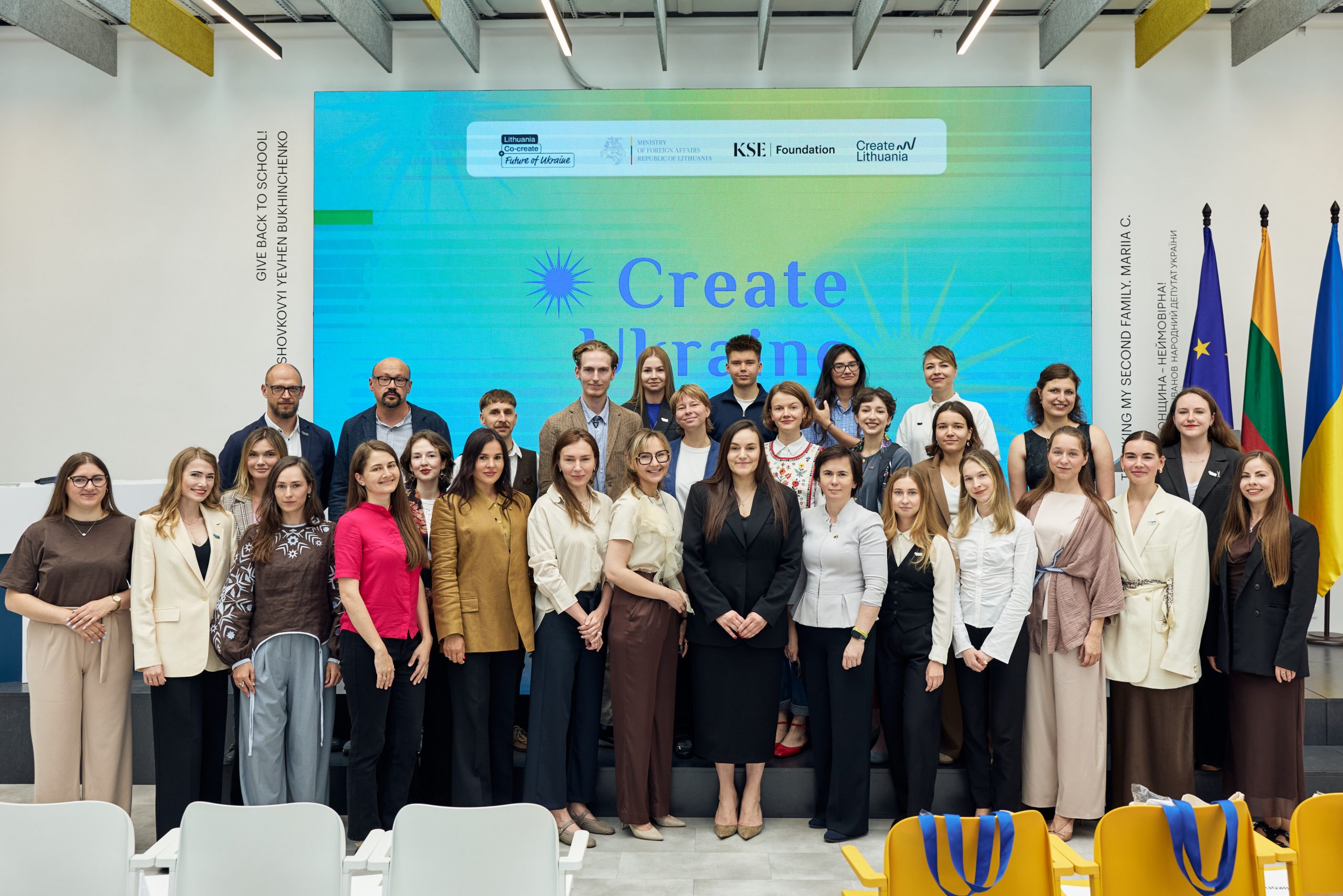
The successful completion of the Future School for Ukraine project was made possible through close partnership and co-creation between Lithuanian and Ukrainian institutions.
As the project implementer, the CPVA team is grateful for the trust, cooperation, and contribution of:
the Ministry of Foreign Affairs of the Republic of Lithuania, the Lithuanian Union of Architects, the Ministry of Education and Science of Ukraine, the State Agency for Restoration and Infrastructure Development of Ukraine, and the project architects Scandura team and Mykhailo Vustianskyi.
Future School for Ukraine is a vivid example that demonstrates how international cooperation can deliver practical, high-impact solutions for Ukraine’s recovery.
We invite donors and partners to scale the impact and build schools with the project.
The Future School Handbook in Ukrainian can be found by the link.